


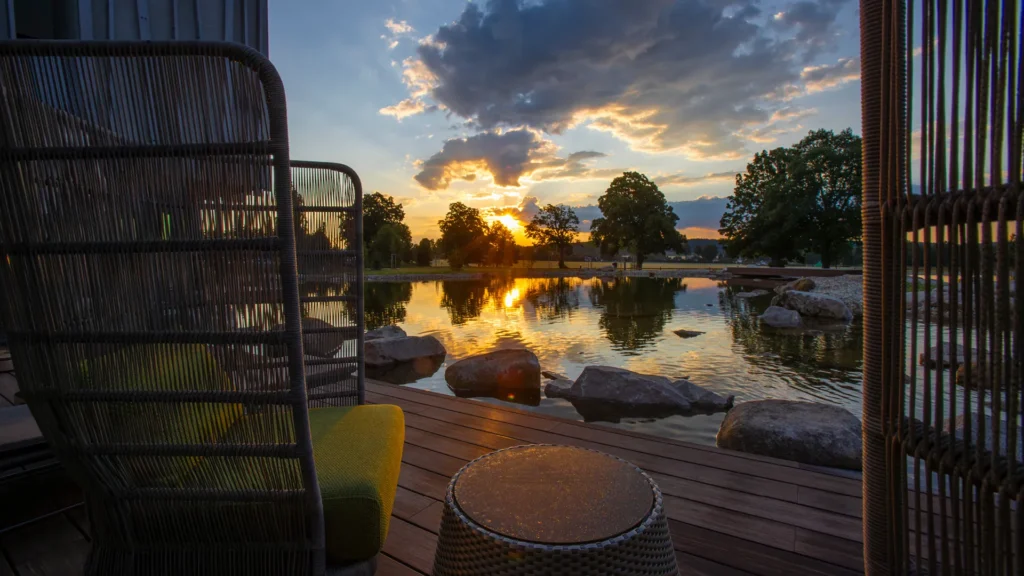
Mornings in Czech Canada have a different rhythm. Light slowly filters through the trees, mist rises from the meadows, and the body begins to wake before we even realise it. Without rushing. Without noise. Naturally.
Perhaps you have noticed it too – that you sleep differently here. More deeply. That tiredness comes quietly in the evening and getting up in the morning feels easier. It is neither a coincidence nor simply a matter of having a comfortable bed. Light plays the leading role here. And darkness. And our internal clock.
Each of us has an internal biological clock – our circadian rhythm.
It regulates sleep, energy levels, hormonal balance, digestion and our ability to recover. These clocks are not found only in the brain; they operate in every cell of the body. American biologist Satchin Panda, author of The Circadian Code, sums up current scientific understanding very simply: “Our health is influenced not only by what we do, but above all by when we do it.”
The strongest signal for these internal clocks is light. Morning daylight sends the body a clear message: the day is beginning. It suppresses the sleep hormone, increases alertness and prepares the body for movement and concentration. This process happens automatically – as long as we do not interfere with it.
Evenings should follow the opposite direction. Towards darkness. Calm. A gradual slowing down. Modern life, however, often disrupts this natural transition. Artificial lighting and screens extend the day far into the night, causing the body to lose its sense of timing. The result can be restless sleep, fatigue and the feeling that even time off does not bring genuine rest.
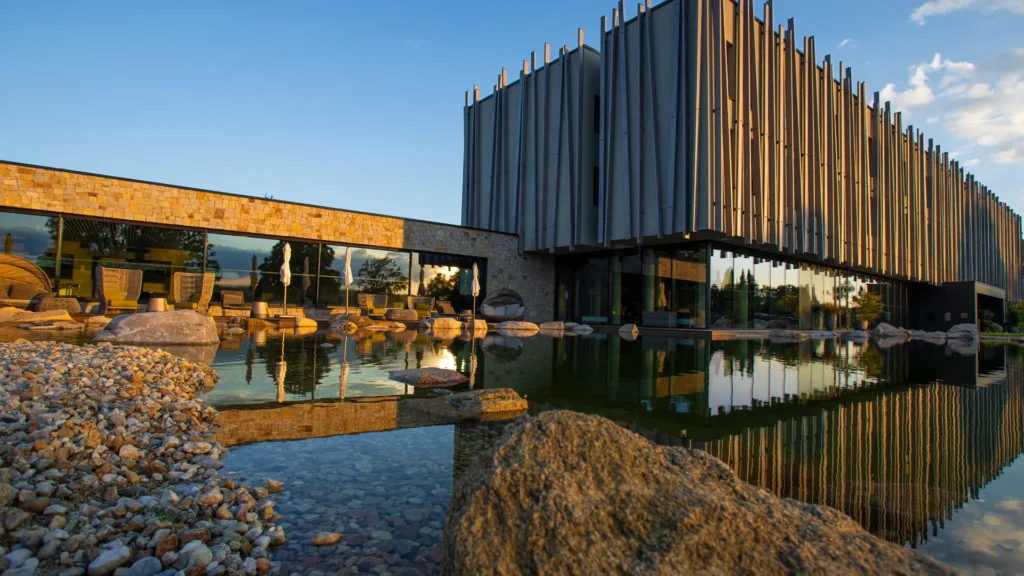
The importance of light
The importance of light and its timing is also supported by Czech research. Neuroscientist RNDr. Zdeňka Bendová has long pointed out that disruption of the natural alternation between light and darkness directly affects sleep, hormonal balance and psychological well-being. “The biological clock responds primarily to the intensity and timing of light, not to our social schedules,” the scientist explains. The body does not follow a calendar or a work schedule. It follows light.
Why is it easier to rest in nature? In a landscape such as Czech Canada, the body is given the space to return to a rhythm it has known for thousands of years. Morning arrives with daylight and evening with dusk. Darkness is truly dark, and night is truly night. Guests often describe how, after just a few days, they fall asleep faster and more peacefully, wake without an alarm clock, experience steadier energy throughout the day and feel a deeper sense of calm. Without instructions. Without effort. Simply because the environment respects the natural rhythm of the day.
Circadian rhythm is influenced not only by light, but also by the timing of meals. Late dinners or irregular eating patterns send conflicting signals to the body – it may be dark outside, but the metabolism is being told that the day is still continuing. As Panda points out: “Our cells have clocks of their own, and food is a signal for them just as powerful as light.” Regularity, daylight and calm evenings create the conditions in which our cells can truly regenerate.
You may not leave your stay at Amenity Czech Canada with any specific rule to follow. But your body will remember the morning light, the calm of the evening and the silence that makes it easy to sleep. And perhaps, once you are back home, you will notice yourself turning the lights off a little earlier in the evening. Opening the window in the morning. Paying more attention to both light and darkness. Not as opposites, but as natural partners that give structure to our day – and greater depth to our rest.